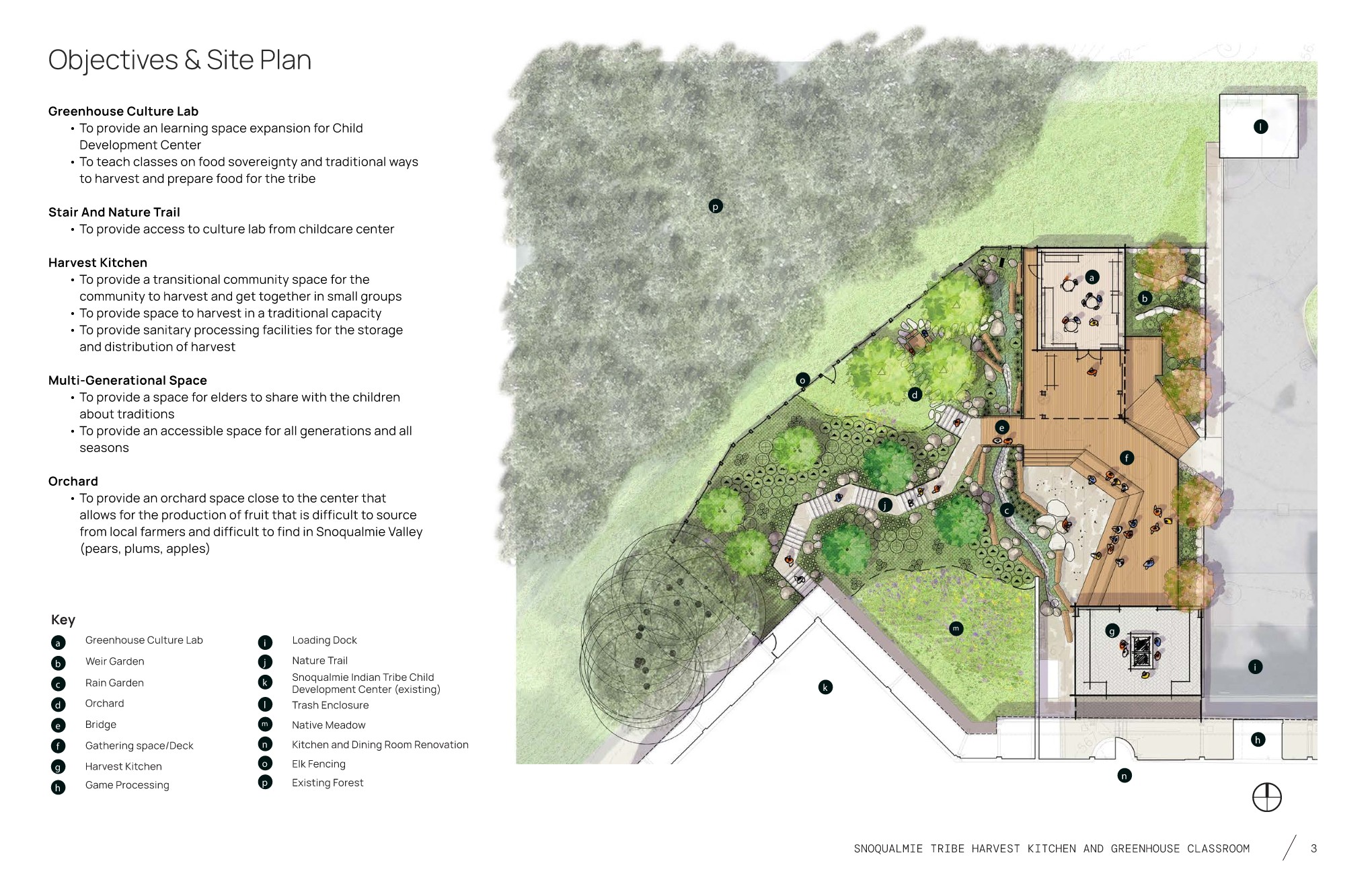
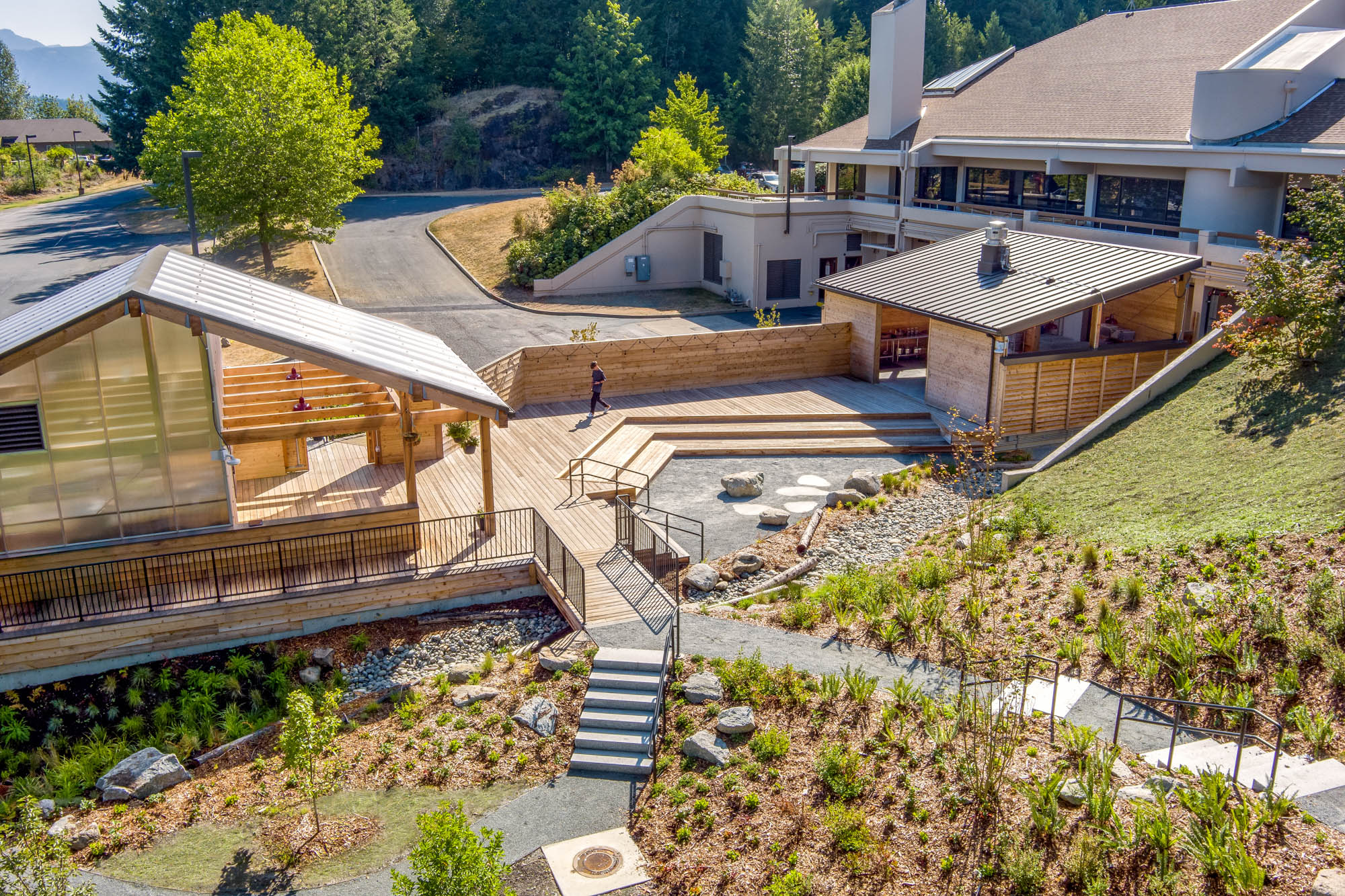
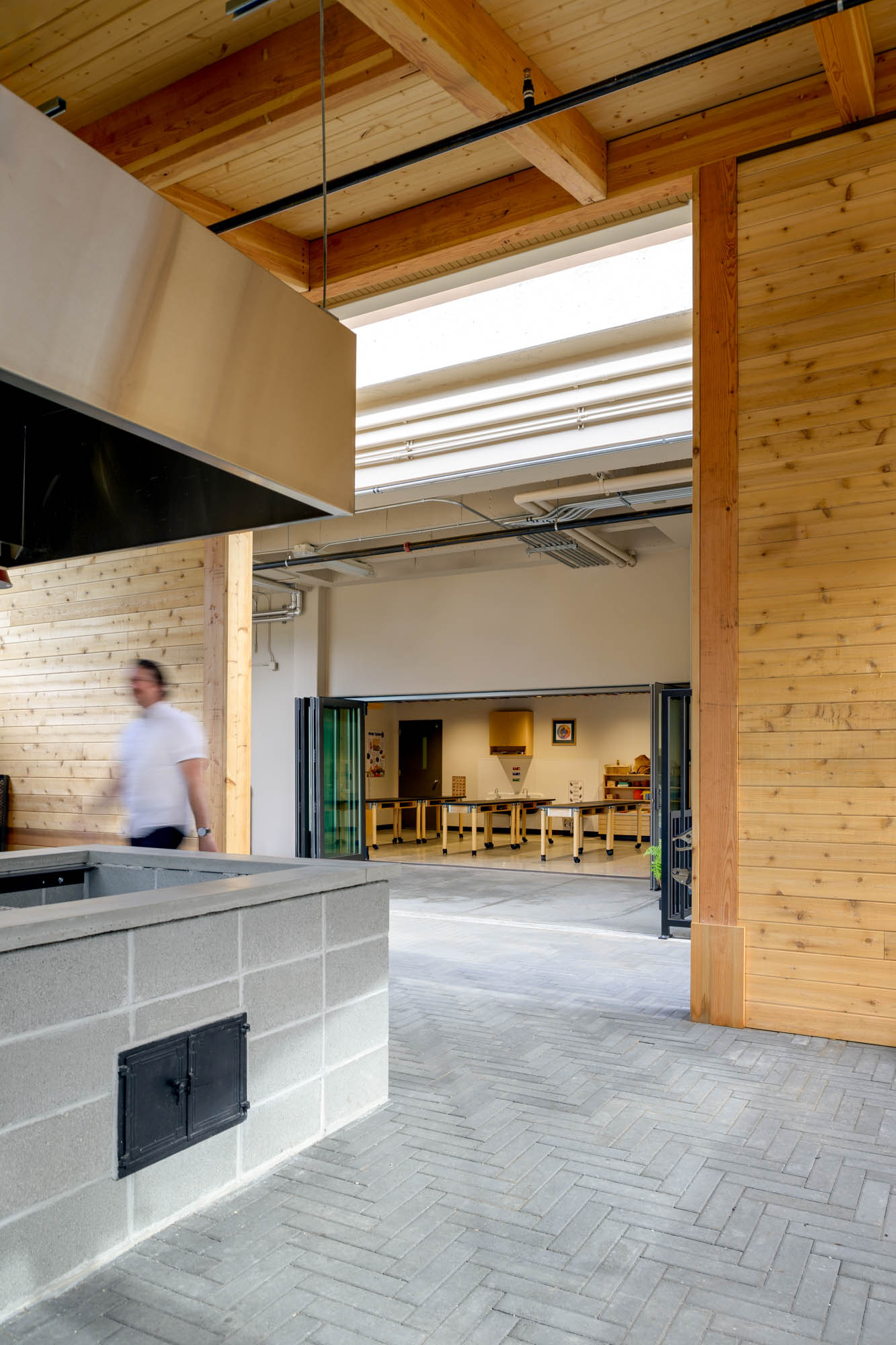
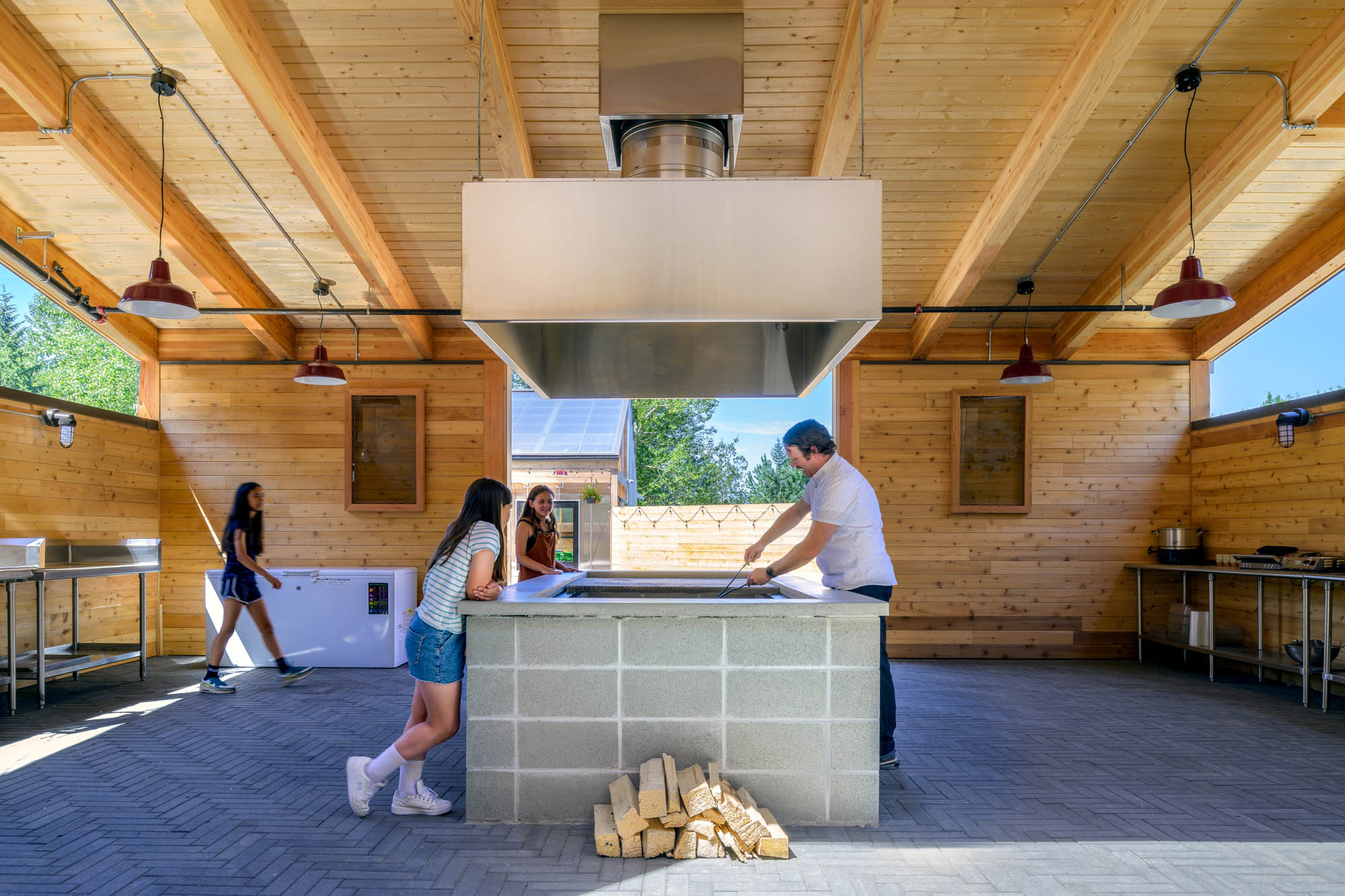
The game-processing area emerged from a visioning session with the Tribe’s head hunter, during which the design team learned about the traditional hunt, from preparation through Tribal game-processing techniques. The resulting elk-processing room includes a viewing portal that allows children and community members to observe and learn about these practices. The outdoor harvest kitchen similarly provides a contemporary setting for traditional food preparation and community gathering.
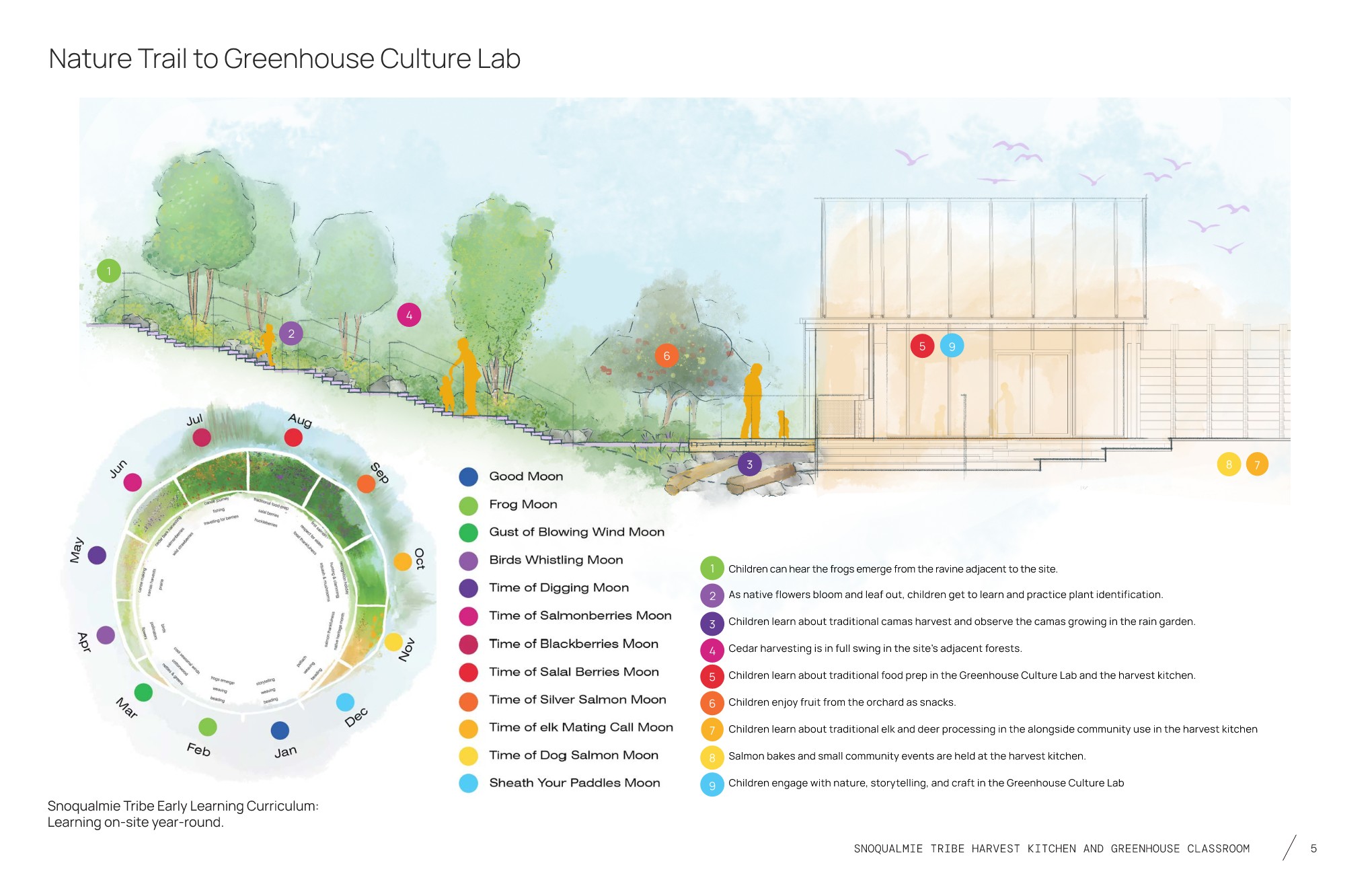
The orchard is an important expression of the Tribe’s pursuit of food sovereignty—the ability to control how food is produced, processed, and distributed. Fruit trees provide a productive landscape that can contribute to community food systems while creating opportunities for children to experience seasonal cycles firsthand.
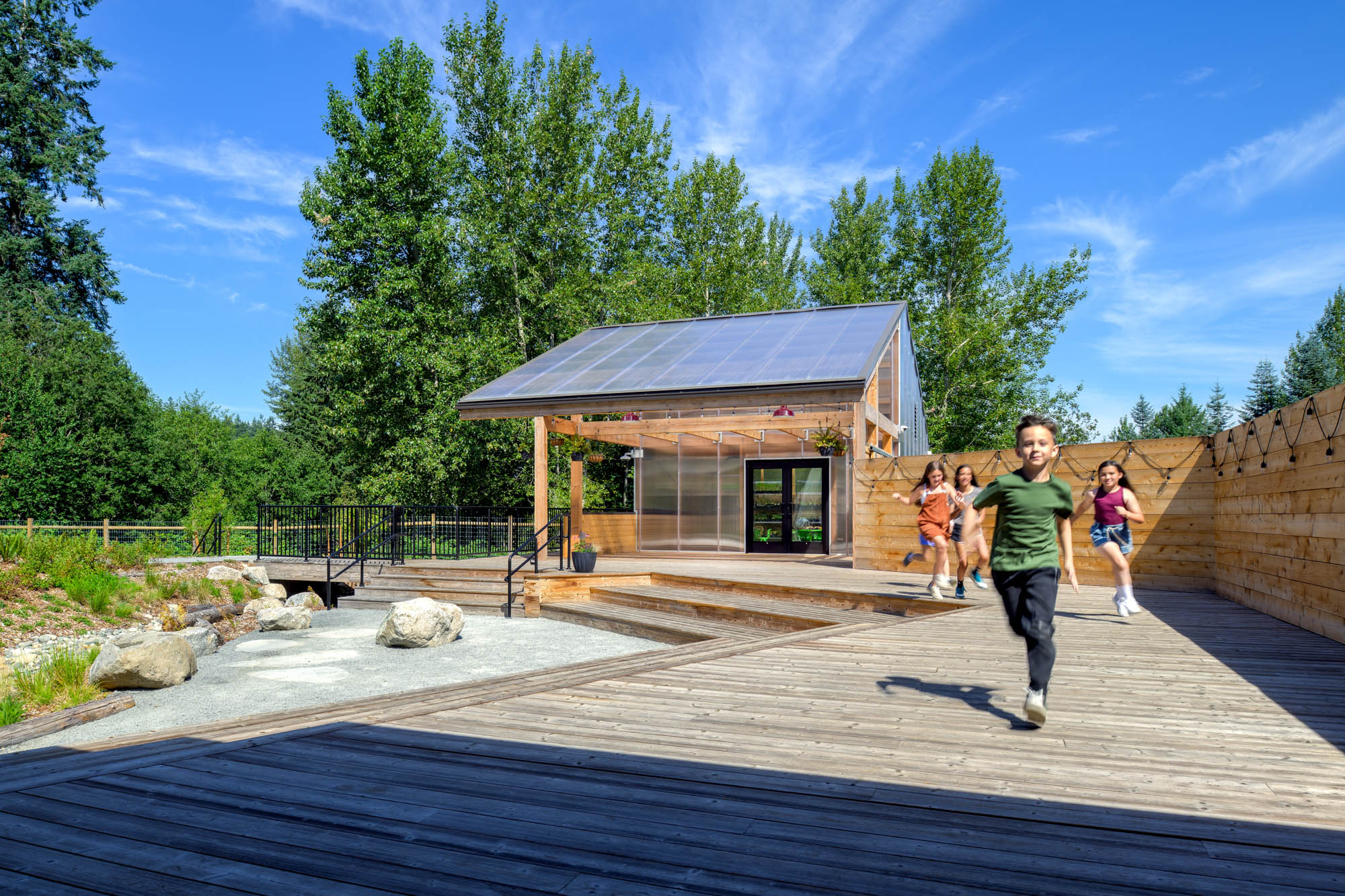
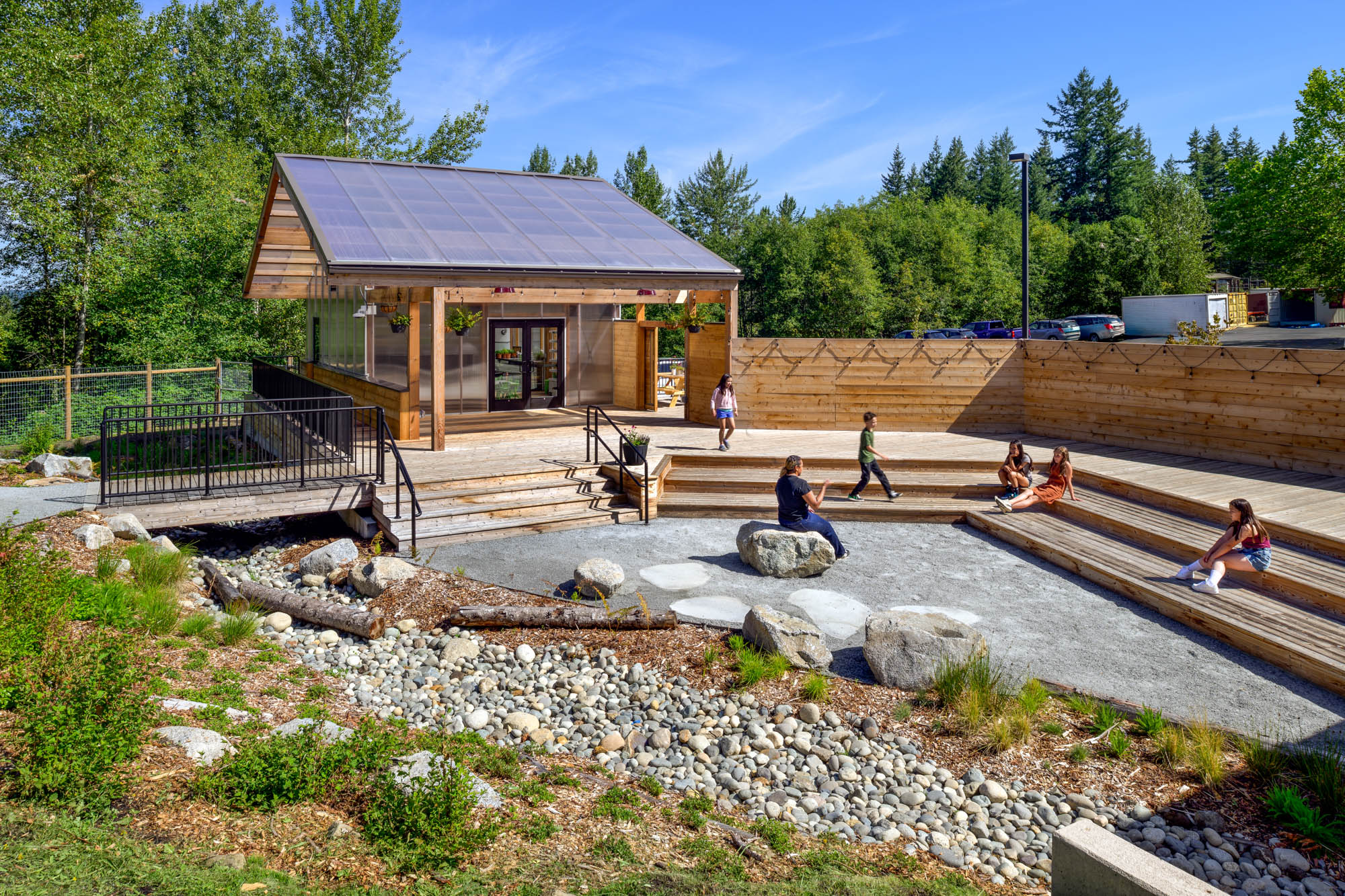
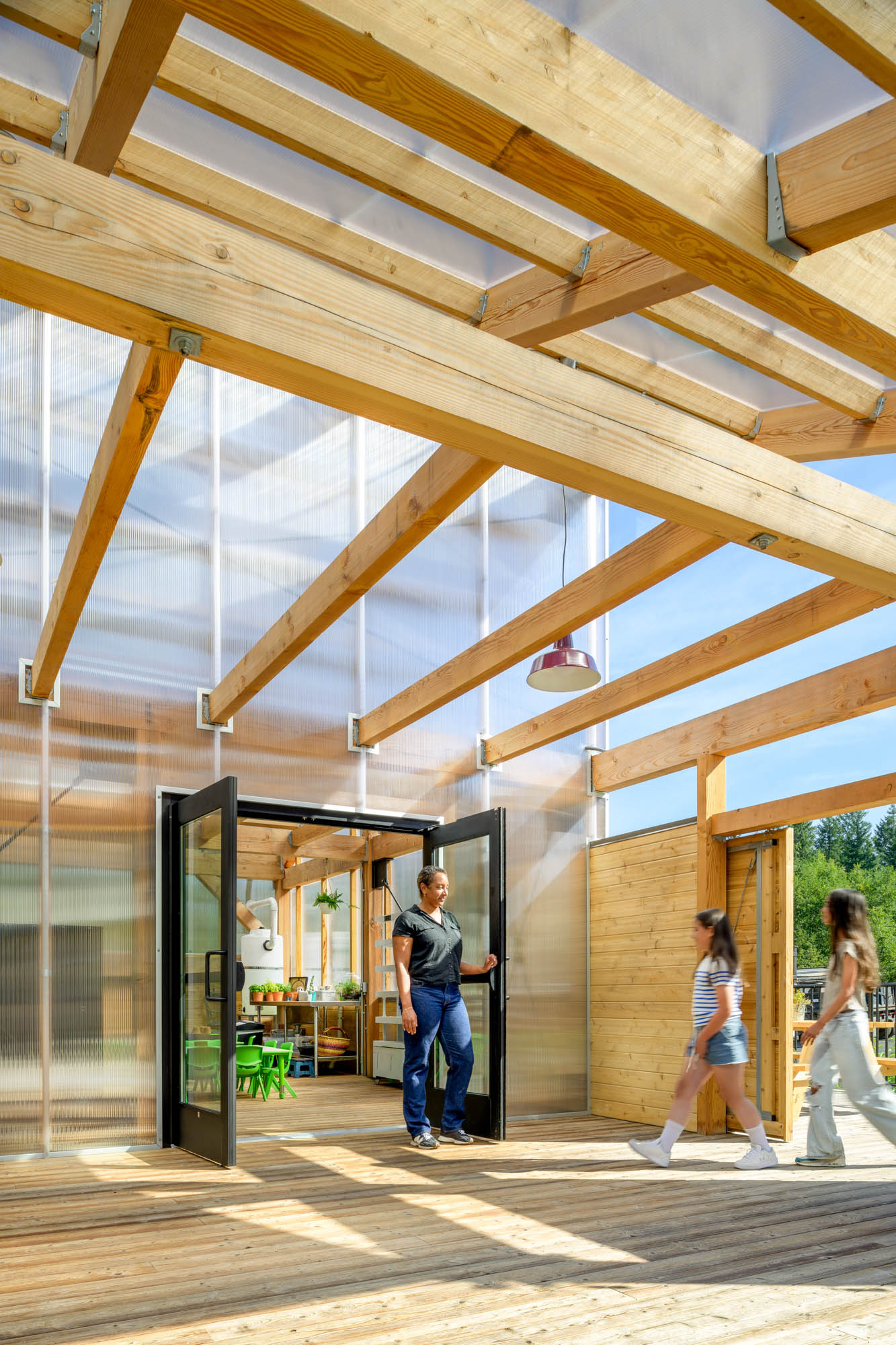
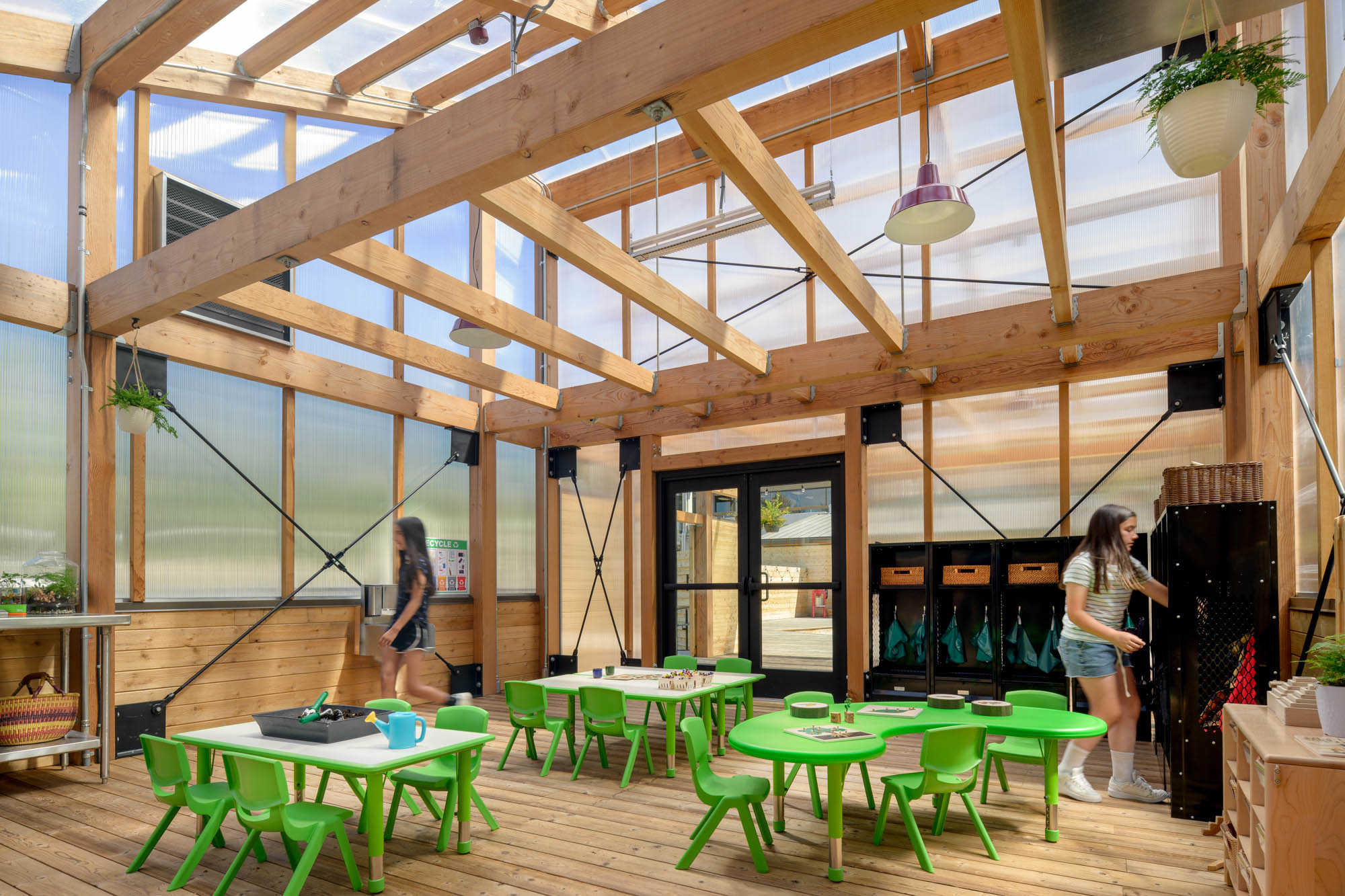
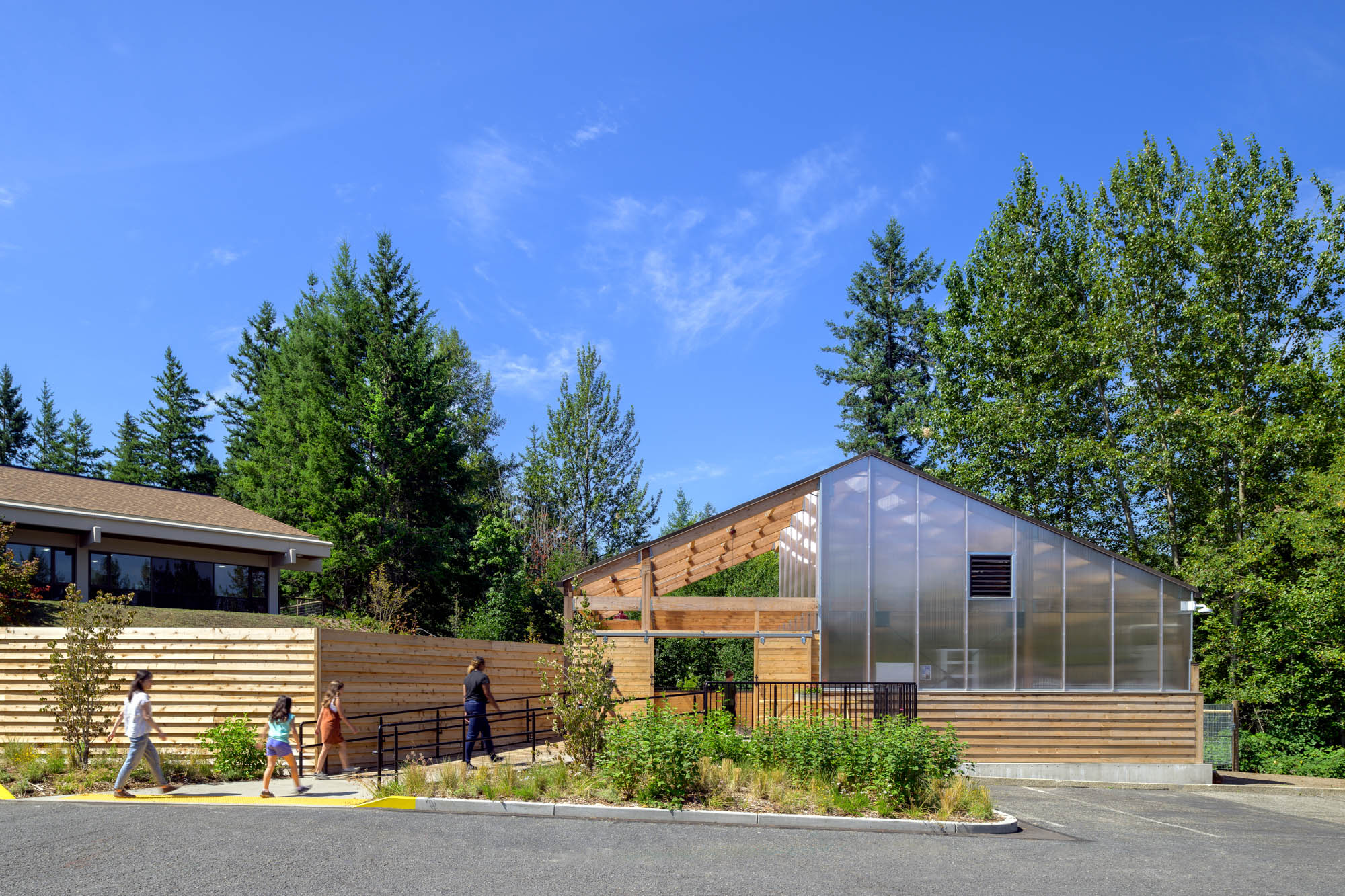
The greenhouse provides an outdoor teaching classroom, while the nature trail and native plantings create opportunities to learn about regional ecology and culturally significant species.
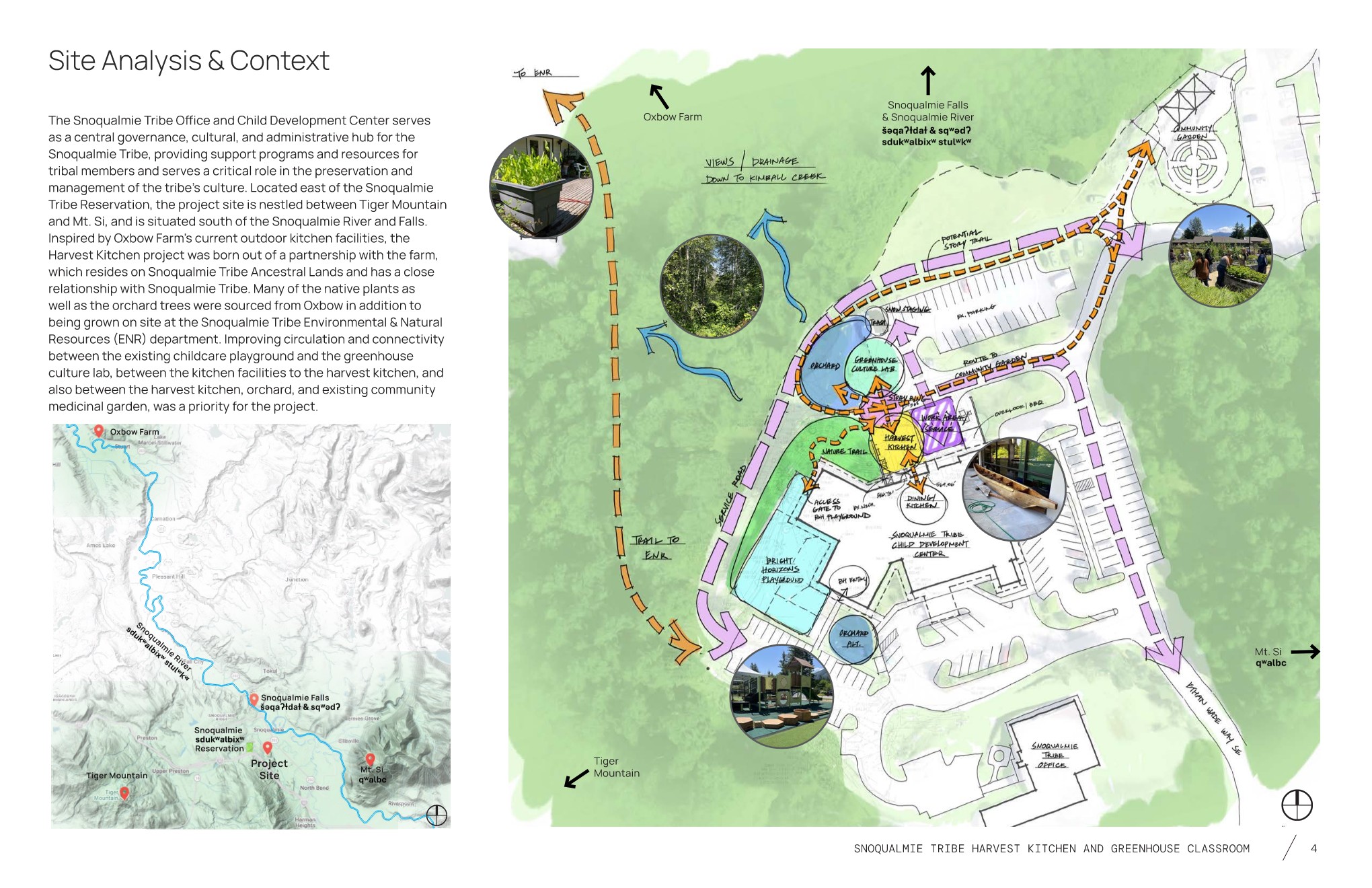
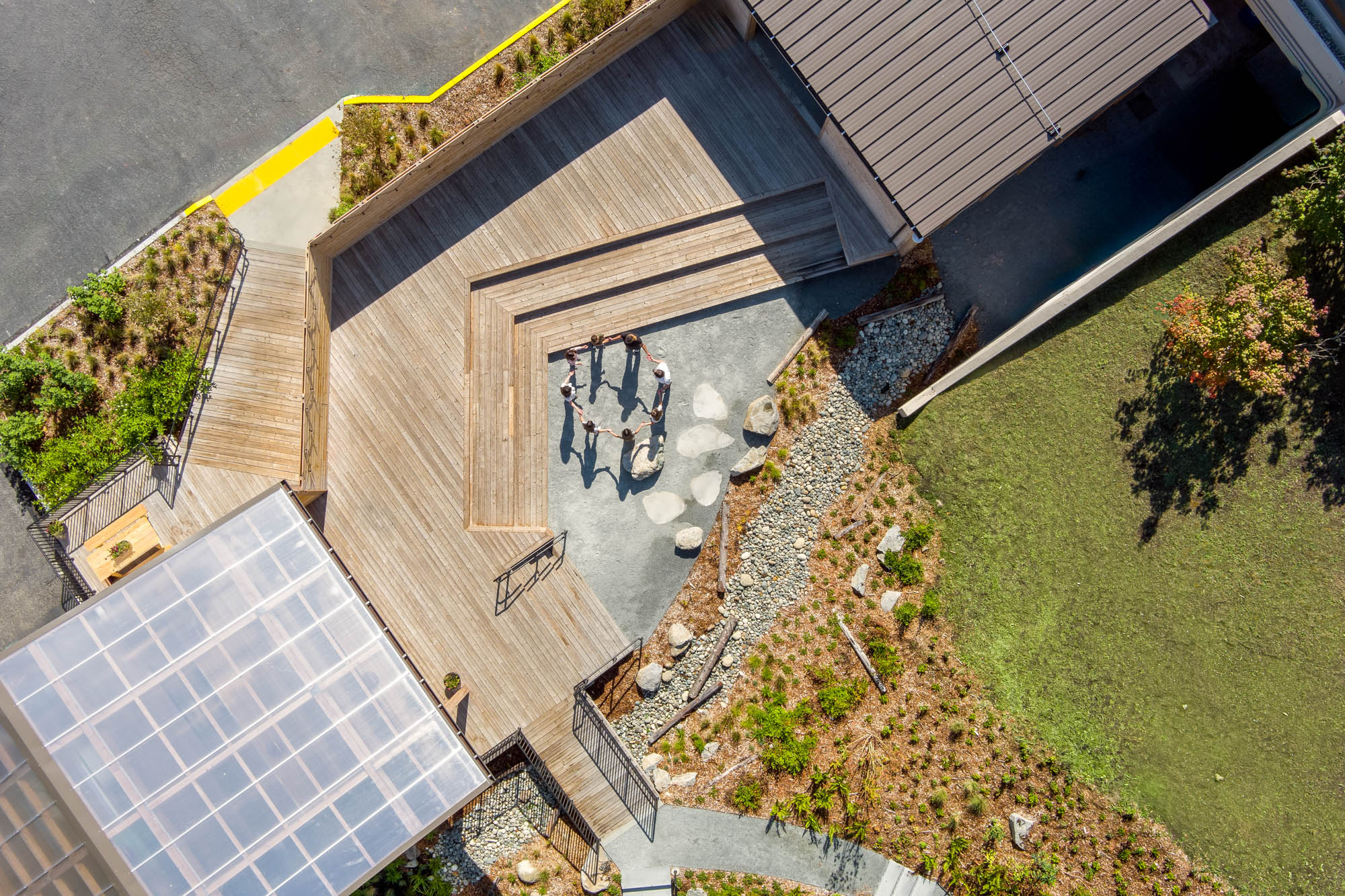
Environmental stewardship is embedded in the project’s landscape, water-management strategy, planting, and relationship to the existing forest. Native plants were a non-negotiable aspect of the design, reflecting the Tribe’s environmental values and developed in collaboration with its Environmental and Natural Resources Department. This partnership ensured that planting decisions were informed by local ecological and cultural knowledge. Most of the plantings for the project were sourced locally from the Native Plant Nursery at Oxbow Farm, which resides on Snoqualmie Tribe ancestral land.
The design has a strong emphasis on using natural materials like cedar decking, stone and crushed gravel for pathways to provide a lighter touch on the land and aligns with the Tribe’s principles to honor and design for the past, present and future generations.